


6 Tips on HVAC Design with Explosion and Fire Risks
In ventilation and air conditioning engineering, especially in industrial building heating and ventilation systems, we often encounter the emission of flammable materials or gases that can react violently with oxygen under certain conditions, such as flour in the food industry and coal dust in the mining industry. While these substances do not explode under normal conditions, when suspended in the air at high concentrations and in full contact with oxygen, if the temperature reaches a point where a redox reaction occurs, a high-pressure shock wave can easily form, leading to an explosion.

Therefore, to avoid explosions, we must promptly remove flammable and explosive materials to reduce the risk. As we all know, the concentration of flammable materials in the air is the decisive factor in whether an explosion will occur. If the concentration is too low, the distance between flammable materials is large, and the reaction of one proton cannot affect the action of adjacent protons, thus preventing an explosion. Similarly, if the concentration of flammable materials is high, but the oxygen content in the mixture is very low, an explosion is also unlikely. Therefore, it is evident that flammable materials have an explosive limit. As long as the problem is resolved before reaching this limit, the explosion risk can be eliminated.

Based on this, in industrial engineering, to reduce the occurrence of danger and improve safety, we often add make-up air and exhaust air systems. The necessary conditions for an explosion in a ventilation system are that the concentration of flammable material in the air reaches the explosive limit, and it encounters a spark or ignition source.
When designing ventilation and air conditioning systems with explosion and fire risks, the following 6 tips should be noted:
1. Ensure adequate airflow beyond standard ventilation needs.
Air volume must be calculated based on the concentration of flammable materials in the space. If concentrations fall within the explosive range, airflow should be increased according to the relevant formula. Gas detection devices are often installed to monitor levels and automatically activate emergency exhaust systems.
2. Prevent localized buildup of flammable substances.
Design exhaust systems based on the density of the flammable material. For example, materials heavier than air typically require downdraft exhaust to prevent accumulation and reduce fire risk from leaks.
3. Use explosion-proof and properly driven equipment.
Explosion-proof fans should be selected, and direct-drive or coupling drive methods are recommended. Avoid belt drives to prevent static sparks, and ensure proper grounding of all equipment.
4. Include explosion-relief construction features.
For rooms with explosion risks, install explosion-proof doors, walls, and relief panels. In emergencies, ventilation fans must start immediately, and relief devices should release excessive pressure to reduce explosion impact.
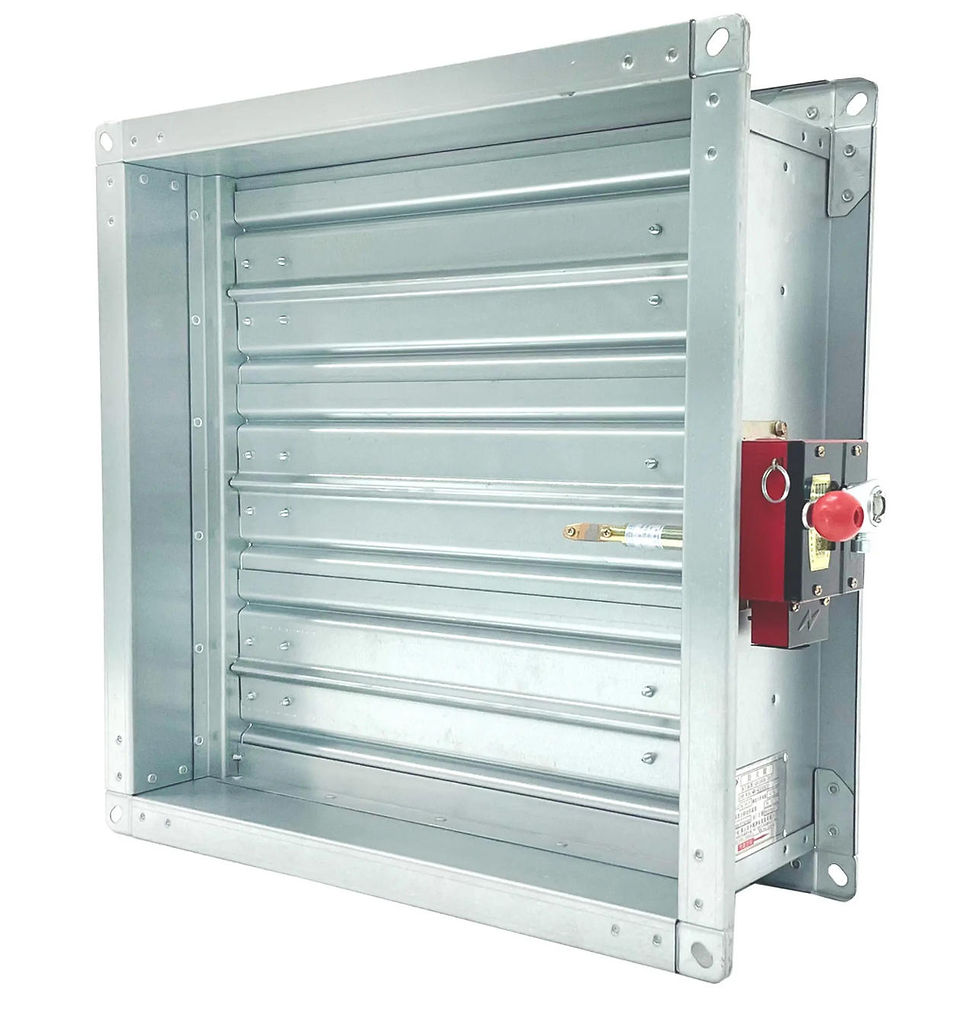
5. Install fire dampers where required.
Important buildings, high-rises, and multi-story facilities with high fire risk should have fire dampers strategically placed in the duct system.
6. Separate supply and exhaust systems in hazardous workshops.
Avoid installing air supply and exhaust in the same room. Spatial separation improves safety, increases visibility of air inlets/outlets, and reduces the risk of gas short-circuiting.


Comments